Business Process Optimization: A Practical Guide for $2M–$15M Businesses
Business process optimization is the systematic improvement of how work gets done. Here's a practical framework for identifying, prioritizing, and implementing process improvements that directly impact profit.
Listen to this article
Powered by ElevenLabs AI voice
Business Process Optimization: A Practical Guide for $2M–$15M Businesses
Every dollar of profit your business generates has to survive the gauntlet of your operational processes. Inefficient processes are profit destroyers — they consume more labor than necessary, produce more errors, require more management attention, and ultimately deliver less value per dollar invested than well-designed processes do.
Business process optimization is the systematic work of closing that gap. This guide provides a practical framework for doing it.

What Process Optimization Is and Isn't
Process optimization is not:
Process optimization is:
The goal is the same output (or better output) with less waste. Done well, process optimization simultaneously reduces cost and improves quality.
"Process optimization is not about working harder. It's about eliminating the work that shouldn't need to happen. In most businesses, 20–30% of operational effort is pure waste — rework, redundancy, and activity that nobody ever challenged." — Operational Efficiency Consultant finding
The Process Optimization Framework
Step 1: Process Identification and Selection
Not all processes deserve equal optimization attention. Start by identifying the processes with the highest optimization leverage:
High frequency + high impact = top priority. A process that runs 50 times per day and has a 5% error rate is worth optimizing before a process that runs twice a week with a 10% error rate. Volume multiplies impact.
Revenue-critical processes. Any process that directly touches customer acquisition, delivery, or retention deserves priority. Inefficiency in these processes has both cost and revenue implications.
Founder-dependent processes. Any process that requires the founder's regular personal involvement is a bottleneck. Optimizing it creates both efficiency gains and leadership capacity recovery.
A Business Process Audit Template provides a structured framework for this identification and prioritization work.
Step 2: Current State Mapping
Before a process can be optimized, it has to be understood. Current state mapping captures:
Process inputs: What triggers this process? What information, materials, or outputs from other processes does it require?
Process steps: Every action in sequence, including who performs it, how long it takes, and what tools are used.
Process outputs: What does the process produce? What does "done" look like?
Process failures: Where does the process commonly break down? What are the most frequent errors or exceptions?
The goal is a true picture of how the process actually works — not how it was designed to work or how people think it works, but how it actually works in practice. These are frequently different.
Step 3: Waste Identification
With the current state mapped, identify every form of waste in the process. The classic lean framework identifies eight types of waste (discussed in Streamline Business Operations), but for practical business process optimization, the most actionable categories are:
Wait time: Steps that involve waiting for approval, information, or inputs from other processes. Waiting is pure waste — it adds time and cost without adding value.
Rework: Steps that exist because earlier steps don't produce reliable quality. The best optimization move is usually fixing the earlier step, not managing its failures more efficiently.
Over-processing: More work being done than the output requires. This is common in businesses that designed processes for a previous (more complex) business model that has since simplified.
Manual work that should be automated: Recurring, rule-based work that technology could handle without human judgment.
Handoff failures: Transitions between people or teams where context is lost, information is corrupted, or accountability becomes unclear.
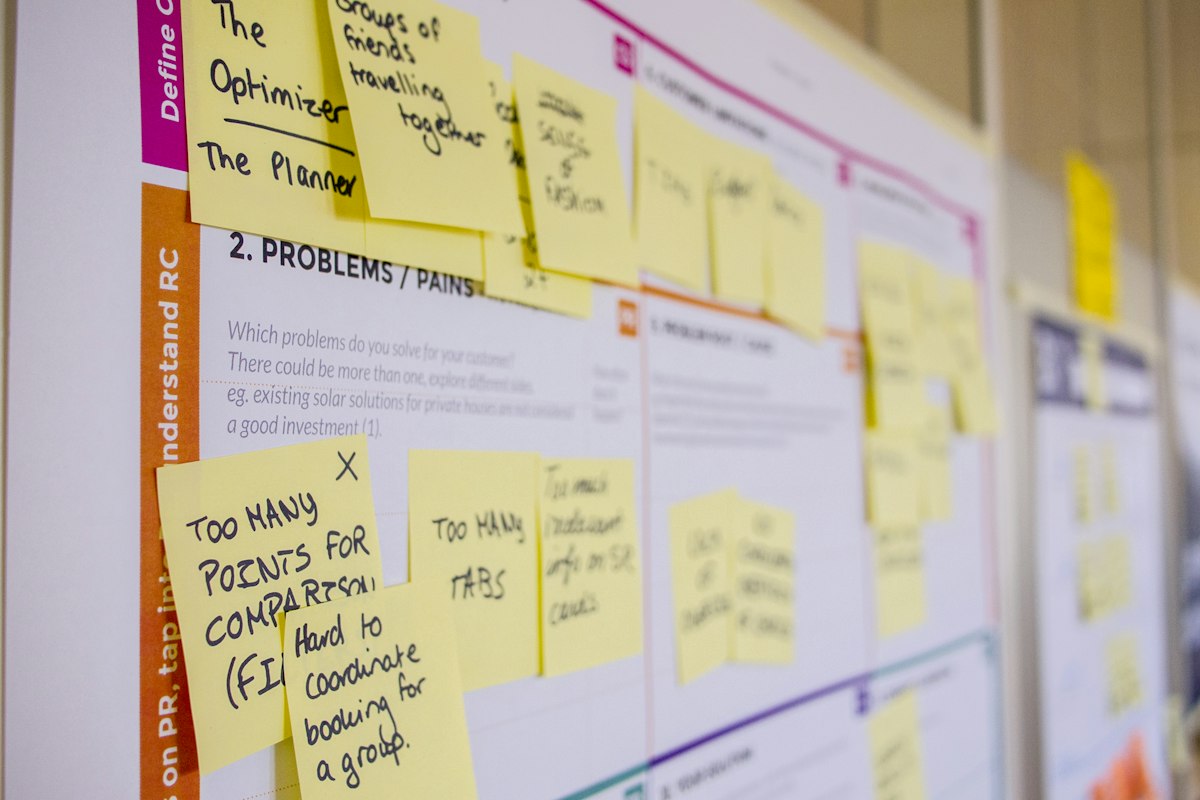
Step 4: Future State Design
With waste identified, design the improved process. Principles for future state design:
Eliminate before optimizing. Before making a step more efficient, ask whether the step is necessary at all. Eliminating unnecessary steps is always more powerful than optimizing them.
Design for the standard case. Optimize the most common scenario first. Handle exceptions separately. Don't let the exception cases drive the design of the standard process.
Pull, don't push. Design processes where work moves forward when the next step is ready for it (pull), rather than when the previous step is done with it (push). Pull systems reduce work-in-progress and reveal bottlenecks more clearly.
Build quality in. Design error prevention into the process itself rather than adding inspection steps at the end. Catching errors earlier in the process is always cheaper than catching them later.
Measure by default. Every optimized process should produce data about its own performance. If the process doesn't automatically generate metrics, add measurement points into the design.
Step 5: Implementation
Implementation is where most process optimization efforts fail. Common failure modes:
Effective implementation requires:
This is exactly the implementation methodology used by practitioners of How to Build Business Systems — and the rigor of implementation is what separates improvements that stick from improvements that fade.
Where Process Optimization Delivers the Most Value
Based on operational audit data across $2M–$15M businesses, the processes with consistently the highest optimization leverage:
Customer onboarding: Most businesses have highly variable onboarding experiences. Standardized, optimized onboarding reduces early churn and improves customer lifetime value.
Lead follow-up: The average response time to a new lead in businesses without optimized follow-up processes is 47 hours. Businesses with optimized follow-up respond in under 1 hour. The revenue difference is substantial.
Billing and collections: Manual, inconsistent billing processes create delayed cash collection and inconsistent revenue recognition. Optimized billing processes recover cash faster and reduce accounts receivable aging.
Service delivery: For service businesses, the delivery process is the product. Optimizing delivery means improving quality, reducing cost, and shortening delivery cycles simultaneously.
Vendor management: Unmanaged vendor relationships consistently overcharge. An optimized vendor management process with regular renegotiation cycles reduces cost without reducing value. See Business Cost Reduction Strategies for specifics.
Connecting to Business Operations Consultant Work
Process optimization is one of the core activities of a Business Operations Consultant engagement. But it's more effective when embedded in a broader operational improvement framework rather than pursued in isolation.
Process optimization without organizational design improvements often fails because the right people don't have the right authority to follow the new process. Process optimization without measurement infrastructure means you'll never know if the improvement is working. Process optimization without change management means the team reverts to old habits.
This is why the Operational Efficiency Consultant methodology integrates process optimization with organizational design, measurement, and change management — because lasting improvement requires all four.
The Financial Case
For a $5M business, a systematic process optimization program focused on the 10–15 highest-impact processes typically delivers:
For the financial context, see How to Improve Profit Margins, How to Increase Net Profit, and Reduce Operating Costs. For the organizational context, see Organizational Audit and Operational Efficiency Framework.
Ready to recover hidden profit?
Most businesses at $2M to $20M are quietly losing revenue to inefficiencies they can't see.
Syboost identifies and eliminates hidden waste in your software stack, payroll, ad spend, and operations. Syboost provides operational and cost consulting services only and is not a CPA firm. Nothing here is financial, tax, legal, or accounting advice. Results vary and Syboost does not guarantee any specific savings or outcome.
Syboost · Resource Library
syboost.comWe use cookies to understand how visitors use our site and to improve your experience. By continuing, you agree to our Cookie Policy.